Stress is a sign of life — you can’t eliminate it, and trying to do so misses the point. What you can do is increase your resistance to it. This page explores why chronic stress is so damaging, and why qigong is one of the most effective tools available for building genuine stress resistance.
Why Chronic Stress Is So Damaging
The stress response exists for good reason. When facing a genuine threat, stress hormones flood the body — sharpening focus, increasing strength and speed, preparing you to fight or flee. Once the threat passes, hormonal signals switch off the response and the body returns to normal.
The problem we face today is that the same physiological response is triggered by situations that aren’t life-or-death — work pressure, financial worry, relationship strain, uncertainty about the future. These situations don’t resolve quickly, and crucially, they don’t give the stress hormones anywhere to go. The off-switch never arrives.
The result of this sustained stress response includes:
- Elevated cortisol, which increases appetite and suppresses immune function
- Digestive problems caused by restricted stomach acid production
- Disruption to sex hormone production
- Weakened immune response — increased susceptibility to illness and fatigue
- Chronic anxiety, mood disorders, and in severe cases, depression
How Qigong Addresses Stress at the Root
From a TCM perspective, chronic stress causes and is caused by disrupted qi flow through the meridians. Stress creates blockages; blockages create more stress. Qigong breaks this cycle by restoring harmonious energy flow — addressing the root rather than suppressing the symptoms.
The scientific evidence supports this. Kenneth M. Sancier, Ph.D., reviewing medical applications of qigong, found that regular practice produced:
- Stabilised blood pressure over a 20-year study period
- Mortality rates in hypertensive patients nearly half that of non-practitioners
- Improved sex hormone levels
- Increased blood flow to the brain — supporting memory, reducing insomnia and headaches
- Increased alpha brain waves — associated with stress relief, health, and vitality
Additional research found that qigong practice significantly reduced anxiety and lowered concentrations of stress hormones including cortisol and ACTH. A further study found qigong to be a promising intervention for elderly people with depression, with practitioners reporting better sleep, reduced pain, and improved mood.
The Role of Meditation — and Why Qigong Goes Further
Part of what makes qigong so effective against stress is that every session also incorporates the benefits of meditation. The research on meditation and stress is substantial: regular practice reduces chronic pain, anxiety, high blood pressure, cholesterol, and blood levels of stress hormones.
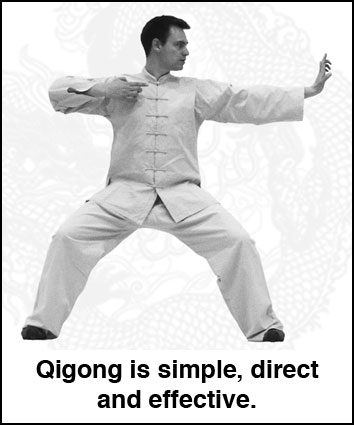
But qigong is more than meditation. Where Zen meditation is described as a neutral process that releases the practitioner from all concerns, qigong is a semiconscious process that involves some awareness and activity. This is why qigong is understood as a healing art, while Zen meditation generally is not.
The three skills that make qigong distinctively effective for stress are:
- Entering a Qigong State of Mind (QSoM) — a state of relaxed focus that produces deep physical, emotional, and mental relaxation
- Energy flow — allowing qi to move through the body, clearing the blockages that chronic stress creates and accumulates
- Standing meditation — accessible to most people regardless of physical condition, delivering the benefits of meditation without the discomfort of seated practice
What Changes When You Practice Qigong
The world doesn’t change when you learn qigong. Things will still happen that you’d rather didn’t, and people will still sometimes behave in ways you don’t deserve. What changes is you — your capacity to absorb stress without being overwhelmed by it, your ability to return to calm, your baseline experience of daily life.
Long-term qigong practitioners are largely unaffected by situations that would previously have triggered a full stress response. This isn’t indifference — it’s genuine resilience, built through consistent practice.
Learning Qigong for Stress Resistance
The stress-reducing benefits of qigong are only available when it’s practiced correctly — with genuine energy flow, not just physical movement. To learn the skills that make the difference, take a look at my online course, available to try for free.