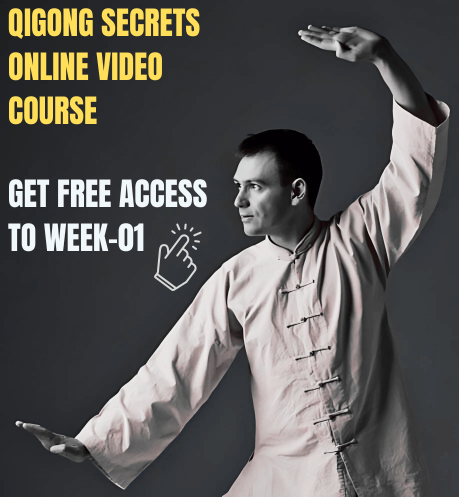
If you could distil qigong practice into two words, they would be these: relaxed and gentle. Not powerful. Not precise. Not effortful. Relaxed and gentle. Here’s what that means across every dimension of practice — and why getting it right changes everything.
Why Relaxed and Gentle?
Qigong works by promoting the smooth flow of Qi through the body’s meridians. Tension — physical, emotional, or mental — is resistance. It interrupts flow. Effort creates tension. Forcing creates tension. Even trying too hard to relax creates tension.
This is why “relaxed and gentle” isn’t just a nice attitude to bring to practice. It’s a functional requirement. Without it, you’re working against the very mechanism qigong relies on.
What Relaxed and Gentle Means in Practice
Your Movements
Qigong movements should be slow, smooth, and unhurried — performed without strain or sharp transitions. There’s no need to stretch to your limit, hold positions with effort, or move with precision. The movements are a vehicle for Qi flow, not an athletic performance. If a movement feels tense or forced, ease back. Relaxed and gentle is always the right direction.
Your Breathing
Breathing in qigong should be natural and unforced. Don’t try to control the depth of each breath or time it rigidly with your movements. Let the breath settle into its own rhythm as you practice. Forcing the breath creates exactly the kind of tension that interrupts Qi flow. Gentle, natural breathing supports it.
Your Mind
This is where most practitioners find the greatest challenge. A relaxed mind doesn’t mean an empty mind — it means a mind that isn’t grasping, straining, or judging. Thoughts may arise during practice. Let them pass without engaging with them. The quality of attention you bring to qigong should feel like the difference between staring hard at something and simply resting your gaze on it.
This quality of mind is at the heart of the Qigong State of Mind (QSoM) — the first of the 3 core skills that underpin effective qigong practice.
A Simple Test for Your Practice
At any point during your qigong session, ask yourself: am I relaxed and gentle right now? Check your shoulders — are they held up or softly dropped? Check your jaw — is it clenched or loose? Check your breath — is it forced or easy? Check your mind — are you straining to get it right, or simply practicing?
If the answer to any of those is tension rather than ease, don’t correct forcefully — that just adds more tension. Simply notice, let go, and continue. That act of noticing and releasing is itself qigong practice.
The Paradox of Effortless Practice
It can feel counterintuitive — especially for people used to exercise that rewards effort — that doing less produces more. But in qigong, relaxation is the skill. The practitioner who moves gently and breathes easily and holds their mind lightly is doing more genuine qigong than one who strains through the same movements with great concentration and effort.
This principle runs through every aspect of the practice, from the most basic qigong exercises to the most advanced. Relaxed and gentle isn’t a beginner’s instruction to graduate past. It’s the standard, at every level.