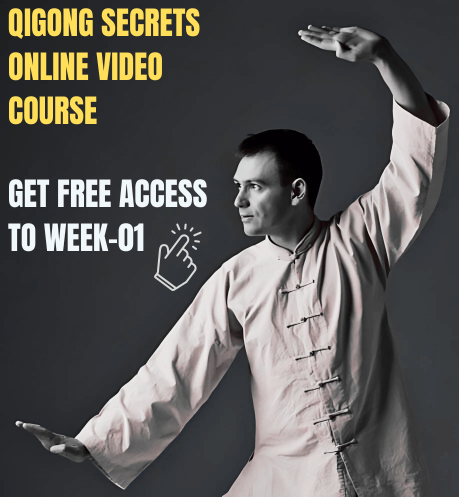
Qigong (also written as chi kung) is the ancient Chinese art of deliberately managing your vital energy. In practice, it combines gentle external movements with coordinated breathing, performed in a meditative state of mind. It is the oldest of the five main branches of Traditional Chinese Medicine, with a history spanning over 5,000 years.
If you’ve never heard of it before, you’re not alone — but you’re in the right place.
What the Word Means
The word itself points directly at the practice. Split into two:
- Qi — energy (specifically, vital energy: the force that keeps the body’s systems functioning)
- Gong — work, or skilled practice
Qigong, then, literally means “energy work” — the deliberate cultivation and management of the body’s vital energy.
How Qigong Works
Qigong works in two stages:
- It removes blockages to the harmonious flow of energy through the body’s meridians (energy streams), restoring Yin-Yang harmony. Whether a blockage is physical, emotional, mental, or spiritual in origin makes little difference to qigong’s effectiveness.
- Once blockages are cleared, qigong increases the strength of energy flow through the meridians — promoting vitality, health, and longevity.
For a deeper look at the mechanism behind this, see How Qigong Works.
Why People Practice Qigong
There are five main reasons people choose to practice qigong:
- Health and vitality
- Longevity
- Internal force (best understood as abundant, directed energy)
- Mental clarity
- Spiritual cultivation
What Makes Qigong Accessible
Unlike many forms of exercise, qigong requires zero athleticism and no equipment. It is easier to learn than Tai Chi and less physically demanding than yoga. If you have 10 to 15 minutes a day, you can practice it — regardless of age, fitness level, or prior experience.
Is Qigong Still Relatively Unknown?
In the West, yes — for now. Ask a room of 100 people whether they’ve heard of yoga, and every hand goes up. Ask the same about Tai Chi, and most hands follow. Ask about qigong, and typically only a handful respond. That gap is closing, but it means most people arrive here with no prior frame of reference — which is exactly why this site exists.
Where to Go Next
If you’re new to qigong, a good next step is to explore the qigong exercises covered on this site, or to read about how qigong works in more depth. For structured learning, the online course is the most direct path.