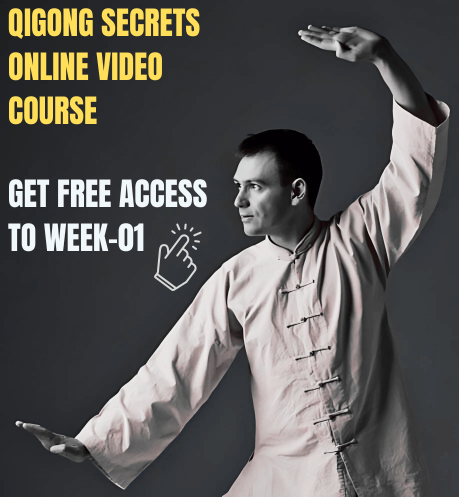
Yes — qigong can be learned without direct access to a teacher. You don’t need special equipment, athletic ability, or a lot of time. Many people have built a genuine, beneficial qigong practice entirely through self-directed study. But there’s an important distinction worth understanding before you start.
The Difference Between Form and Qigong
Qigong has two components: the physical movements (the form) and the art itself — which includes genuine energy flow and a Qigong State of Mind (QSoM). The form is not the art of qigong. Practicing the movements alone produces limited results. Practicing them correctly — as qigong — produces the health benefits the tradition is known for.
This distinction matters for self-directed learners because it’s the part most easily missed. A teacher catches it immediately. Without one, you need clear, explicit instruction on both the movements and the energy and mind components — not just a demonstration of the form.
What Self-Directed Learning Looks Like in Practice
A useful way to think about your options:
- Good: Learning from a well-written qigong book — useful for theory and history, harder for learning movement correctly
- Better: Learning from a good online qigong course — video instruction closes the gap that books leave, especially when the course addresses both form and the skills needed to practice it as qigong
- Best: Learning directly from a qualified qigong teacher — the fastest route to correct practice and the deepest results
If a teacher isn’t accessible to you right now, a good online course is a genuine and worthwhile path — provided it teaches the art, not just the movements.
What to Look for in a Self-Study Resource
Whether you use a book, a video, or a structured course, look for instruction that goes beyond the physical form. The best self-study resources will teach you how to generate energy flow, how to develop a Qigong State of Mind, and how to know whether your practice is working. Without these elements, you’re learning exercise — not qigong.
For a full breakdown of what makes a good online qigong course, see: learning qigong online — what to know before you start.
Getting Started
You only need enough space to move, and 15 minutes a day is sufficient for a meaningful practice. The 18 Lohan Hands is a good starting point — a complete, well-documented set of 18 exercises that builds systematically from foundations to advanced practice.
If you’d like structured guidance through the full set, my online course covers all 18 exercises with video instruction and the supporting material needed to practice correctly at home.