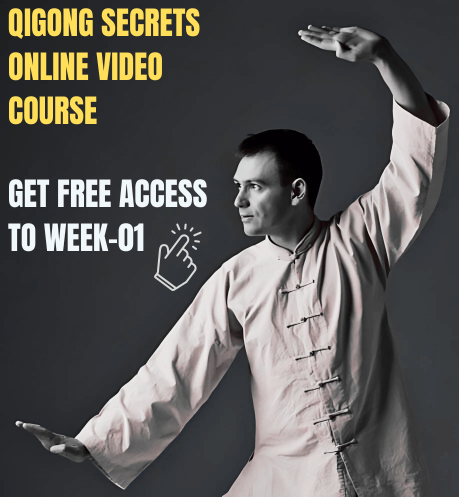
Big Windmill Hand is the sixteenth of the 18 qigong exercises that make up the Shaolin 18 Lohan Hands. Also known as Windmill Hand, 大 風 車 手, and DA FENG CHE SHOU, it is another exercise whose simple appearance — a rotation of the arm around the shoulder joint — gives little indication of the depth of benefit available when practiced correctly.
Key Benefits of Big Windmill Hand
When practiced as qigong — not merely as physical form — Big Windmill Hand offers the following benefits:
- Beneficial for the pancreas, liver, and spleen
- Stimulates the side meridians
- Helpful for those with diabetes
- Develops strong arms and internal force — sufficient, for martial artists, to break bricks without additional conditioning
Internal Force: Not Just for Martial Artists
Several exercises in the 18 Lohan Hands develop internal force, and Big Windmill Hand is one of the more effective. It is worth being clear that internal force is not exclusively a martial arts asset. An abundance of internal force allows you to work harder with better results, sustain physical and mental activity for longer, and generally enjoy more vitality in daily life — regardless of any interest in martial arts.
An Important Note on Form vs. Qigong
The benefits above are only available when this exercise is practiced as qigong — with a Qigong State of Mind (QSoM) and genuine energy flow. Practicing the physical movements alone — the form — will not produce these results. The form is not the art of qigong.
Learning Big Windmill Hand directly from a qualified qigong instructor is strongly recommended. For those without access to a local instructor, the Qigong15 online course covers the principles that distinguish qigong from qigong form in detail.
Next in the 18 Lohan Hands
The next exercise in the set is Lift Heels Bend Knees — exercise 17 of the 18 Lohan Hands.