Fear linked to the kidneys, the 5 elemental processes, and energy flow — here’s how qigong addresses fear at the root, plus the most powerful complementary practice to go alongside it.
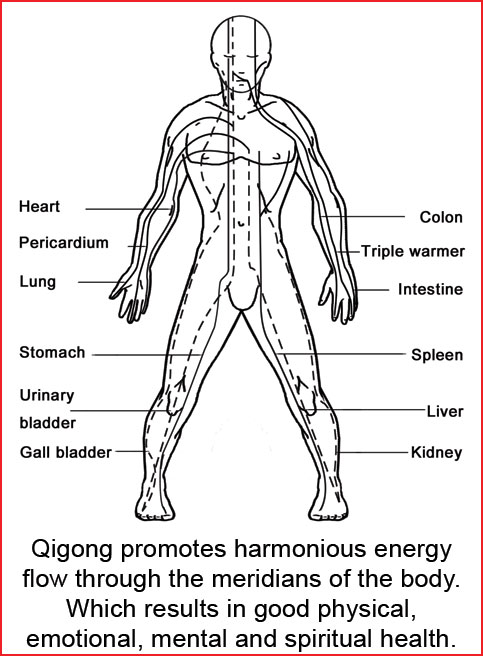
From a TCM perspective, fear is linked to the kidneys and the Water element. This means that fear — whether generalised anxiety or something more acute — is understood as a symptom of disrupted energy flow through the kidney meridian. Restoring that flow is how qigong addresses fear at its root, rather than managing it at the surface.
What the 5 Elemental Processes Tell Us About Fear
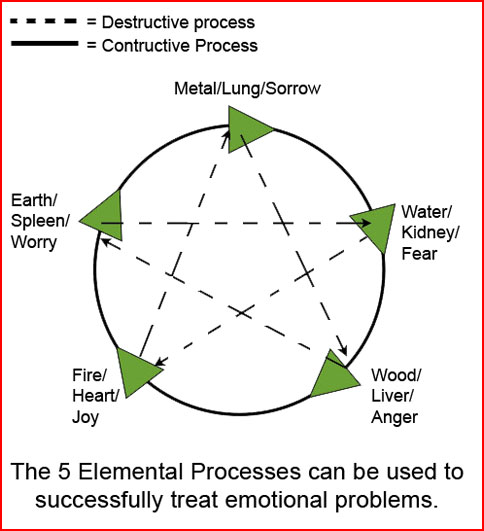
In TCM, the 5 elemental processes map emotions to organ systems. Fear corresponds to the Water element, which corresponds to the kidneys. This gives us two practical approaches:
- Strengthen the kidneys directly — restoring kidney energy reduces the fear response at its source
- Use the creative cycle — strengthening the lungs (Metal) nourishes the kidneys (Water), using the Metal-creates-Water principle
There is also a third option from TCM theory: the emotion corresponding to Earth is worry, and Earth can destroy Water in the destructive cycle — meaning worry could theoretically counteract fear. In practice, deliberately inducing worry as a therapeutic tool is not something worth pursuing. The qigong approach is more direct.
Qigong Exercises for Overcoming Fear
From the qigong healing perspective, fear is a problem of Yin/Yang disharmony caused by blockages to harmonious energy flow. Restore the flow, remove the blockages, and the fear resolves — because it is natural to be healthy.
The two most cost-effective qigong exercises for addressing fear are:
- Reverse Hands Bend Waist (also known as Nourishing Kidneys) — directly targets kidney energy
- Green Dragon Separating Water — supports the heart and emotional clearing
The key during practice is to let go and do nothing during energy flow. Qi flows where attention goes — so focusing mentally on the fear, or trying to direct the qi, interferes with the process. Trust your qi to find the blockage.
The Most Powerful Complement to Qigong: Faith
Qigong alone is capable of overcoming fear. But combining it with a parallel inner practice significantly accelerates the process. The most powerful antidote to fear found outside of qigong is faith — not religious faith necessarily, but the quiet, evidence-based conviction that things will be okay.
Faith develops gradually, starting from a simple belief held consistently. A useful starting point: choose a short statement — something like “everything is going to be okay” — and return to it many times throughout the day. Not as a surface-level repetition, but slowly, with genuine contemplation. Over time, small experiences accumulate that back up the belief. The belief deepens into faith. The faith displaces the fear.
As a practical note on what this kind of contemplation looks like: it doesn’t require effort or intensity. Think of a family member right now. You didn’t labour over what they were wearing or where they were — you simply thought of them. That same quality of light, easy attention is all that’s needed.
Going Deeper
For a broader look at using qigong for emotional health — including overcoming depression, worry, and low self-esteem — see Smiling From the Heart.
Or, to learn the qigong exercises referenced above with proper instruction, take a look at my online course — available to try for free.