If you’re practicing real qigong — not just qigong form — one of the most common mistakes is practicing multiple exercises in a single session. This page explains why that undermines your results, and what to do instead.
The Mistake: Treating Qigong Like a Sequence of Forms
A common question from newer practitioners goes something like this: “Why practice one form per session? Wouldn’t it be better to practice Lifting the Sky, Butterfly Dancing, Shooting Arrows, and Plucking Stars all in the same session?”
It’s a reasonable question — and it reveals a misunderstanding that holds a lot of practitioners back.
The mistake is thinking that the forms of qigong are qigong. They aren’t. They’re forms — the external movements that, when practiced with correct energy and a Qigong State of Mind (QSoM), produce real qigong. Without those skills, you’re doing gentle exercise. The form is not the art.
Why Different Forms Produce Different Results
Each qigong exercise works on specific meridians — the energy channels that run through the body and connect to the organs. Different exercises influence different meridians, and as a result, produce different types of energy flow.
When you practice one form in a session, your energy flow is directed and coherent. When you practice several forms back to back, the energy flows compete and fragment — you get less of everything rather than more.
This is also why many practitioners taught by Tai Chi teachers don’t get the results they expect from qigong. Tai Chi is typically practiced as a sequence of forms performed one after another — and teachers trained in that tradition often apply the same structure to qigong. The outward movements may look similar, but the underlying approach is fundamentally different.
How to Apply This in Practice
Focus on one qigong exercise per session. Over time you’ll notice that certain exercises suit you better than others — some will produce stronger energy flow, some will address specific areas more effectively. Practicing one form at a time is what allows you to discover this.
Practicing several forms in one session — what might be called Self Manifested Energy Flow — is an advanced approach used in specific contexts. It is not the standard method for building qigong skill, and is not appropriate until the underlying skills are well established.
The qigong practiced at Qigong15 is high level, which is also why sessions are short — 15 minutes of correct practice is enough. More is not better. Overpracticing can lead to problems that come from not following instructions rather than from qigong itself.
The Broader Point
Qigong skills — entering a QSoM, generating energy flow, standing meditation — take time and correct guidance to develop. Focusing on one form at a time is part of how those skills deepen. If you’re unsure whether what you’re practicing is genuine qigong or qigong form, the Qigong vs Qigong Form page covers how to tell the difference.
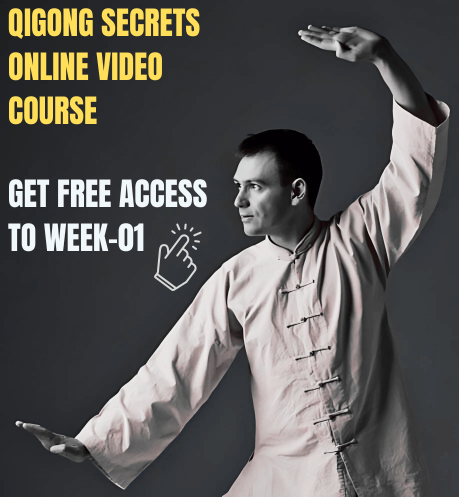
To learn qigong the way it’s practiced at Qigong15, take a look at the online course — week one is free.