Category: Chi Kung

  • Hotter Colder — The Way To Discover Your Destiny

    Have you ever played the ‘Hotter/Colder’ game with a child? It goes like this, you hide something and as they walk around the room you say:

    “You’re getting warmer, warmer, colder, warmer, hotter, boiling hot – Yay! There It IS!”

    I still play this game with my son when he asks me where something is, like the TV remote, that’s usually hiding in plain view (a symptom called ‘Boy Vision’).

    You can use this hotter/colder approach for plotting your life path.

    I’ve worked with 100’s of Qigong students helping them to get clear on their aims (long term) and objectives (short term) for their Qigong training and for their life. If there is one thing I am certain of, it is that very few of us are born with a clear purpose or are driven to fulfill a particular destiny.

    I have noticed though, and I once ‘suffered‘ from it myself, that we’re led to believe that if we don’t have a clear destiny, purpose or mission then we’re never going to amount to much in life.

    This simply isn’t true.

    Sure, it’s great if you do know why you are here and what your destiny on this great planet is, but it’s not essential.

    If, like I used to be, you are frustrated by your own lack of certainty about your destiny or life path then I suggest you use the ‘Hotter/Colder’ approach.

    If one day the God of your choice whispers your destiny into your ear. Fantastic. Until then you get to choose your own path, your own destiny.

    It works like this:

    I look at two possible options (or more).

    1. Wash dishes for a living in a local hotel
    2. Teach Qigong

    Option 2 feels much ‘Hotter’ for me than option 1.

    Here’s another one:

    1. Focus my time on getting to the USA to teach Qigong
    2. Focus my time on writing my second Qigong book

    Option 1 is ‘Hot’ but option 2 feels ‘Hotter’.

    Obviously these examples are simplistic, there are a lot of other variables to consider and life is rarely this clear cut. But when faced with a lack of certainty about what to do or what path to take – you get to choose.

    You never need to know what the end destination is, you’re not expected to know what lies around the next corner. You just need to decide whether one course of action feels hotter or colder than another.

    And then the real challenge begins – following the ‘Hotter’ course of action. Because I have to tell you it’s not always going to be easy – sorry about that. Just do your best and show yourself compassion at all times.

    Here’s to living your life ‘On Purpose‘.

    Marcus James Santer

    PS. When faced with uncertainty, you get to choose. Which choice feels ‘Hotter’ for you?

  • Can You Teach Yourself Qigong?

    Qigong can be easy to teach yourself, and can lead to all sorts of benefits. You only need the will to do it and clear instructions to follow. After all, you do not need special equipment or clothing. And no athleticism, either. Qigong is easy to learn!

    Read on to learn how you can start qigong practice today.

    Qigong Can Be Easy to Teach Yourself

    The good thing about qigong is that it can be very easy to teach yourself. Many people are not aware of this because they think you need access to a living master. While that is nice, it’s not necessary.

    The easiest way to start is by using an instructional qigong video. A good video will walk you through the basics of learning Qigong. And if you watch an online video, you can get started on your path today.

    Of course, there are also many books available that can assist in teaching yourself Qigong. However, following the forms will be harder as you will need to use your imagination to “fill in the gaps” between movements. Still. Books are wonderful for the theory and history.

    If there is no way for you to access a qigong video, books can be of great assistance! Books can include guided meditation and visualisation exercises that help develop your mind/body connection which makes learning the forms easier over time.

    You Can Start Qigong Practice Today

    There are a lot of beginner videos on youtube that can get you started. You can also take the official Qigong15 online course which teaches you a systematic way of practicing Qigong safely.

    It is really easy to learn once you have a good instructor who knows how to convey the important steps through video. Not only can you learn Qigong from home, you will ENJOY the experience immensely (a sign of correct practice!)

    No Need for Special Equipment or Clothing

    You can do qigong in your home, office, or any other place that is convenient for you. There is nothing you need to bring. You only need enough space to safely practice the movements.

    I also recommend the space be a positive, uplifting environment. The happier and more relaxed you feel, the better your practice will be.

    Enjoy the Health Benefits That Can Come From Regular Qigong Practice

    Qigong can lead to all sorts of benefits, including reduced stress and improved immunity.

    You can also develop better posture, reduced anxiety and depression, improved sleep quality, heightened libido, and more stable emotions with more vitality.

    Best of all, many of these benefits can be achieved with just fifteen minutes a day. Furthermore, once you feel the good effects from your practice you will want to do it even more! However, I only recommend two fifteen minute sessions when practicing the Chi Kung we do at Qigong15.

    Start Practicing Today!

    If you would like to teach yourself Qigong starting today, and prove to yourself how easy it really is, I invite you check out the Qigong Home Study Course! It is an affordable way to learn a high-level Qigong which cost the instructor many thousands to learn.

  • Can Practicing Qigong Cause More Harm Than Good?

    Practicing Qigong, like any discipline, requires a careful approach to ensure safety and effectiveness. As more individuals embrace this ancient Chinese practice for its profound benefits on mind, body, and spirit, questions regarding the safe practice of Qigong without formal guidance have arisen.

    An inquiring mind asks:

    Question: I bought your book ‘Shaolin Chi Kung’ but I’m concerned about something I read elsewhere. That someone who practices Qigong without formal training under the guidance of a Master could do themselves more harm than good.

    Could you give me some advice on how best to practice Qigong safely and effectively?

    Here’re 3 things to consider:

    1. Not all Qigong is the same

    You’ll notice that some Qigong looks like mini Tai Chi sets made up of only 3 or 4 moves. The 18 Qigong exercises from my book fit into this category.

    Then you have Qigong that doesn’t have any ‘moves’. The practitioner simply gets into position and holds that stance. From the outside they appear to be doing nothing. Zhan Zhuang, Small Universe and Big Universe are examples of this type of Qigong.

    2. Follow the instructions to the best of your ability

    The 18 Qigong exercises in my book are very safe to practice without the guidance of a Master.

    Why?

    Because they’re made up of more than one ‘move’. So if you get that move wrong it’s not the end of the world. And the PERFECT Qigong System I teach in the book has many safety features built into it.

    If you’re the kind of person who can follow instructions (you’d be amazed how many people can’t) then you can gain valuable Qigong benefits safely.

    3. It’s not what you can see that’s important

    There are 3 levels of enhancing and building energy flow through the meridians (energy streams) of your body:

    • By practicing 3 or more Qigong exercises in one set. At this level the focus is on using the exercises performed in a Qigong State of Mind (QSoM) to enhance energy flow. Medical Qigong and Self Manifested Qi Flow are good examples of this type of Qigong.
    • By practicing 1 Qigong exercise. At this level the focus is on performing the exercise in a QSoM combined with the correct breathing (if applicable). This is my preferred method of practicing Qigong.
    • Advanced Qigong techniques e.g. Zhan Zhuang, Big Universe, Small Universe etc. Personally I believe these techniques are impossible to learn from a book or DVD because so much of their ‘performance’ is internal. You can’t see it. These techniques make use of the mind to enhance and build energy flow.

    I used to think you could learn anything from a book, until I got my first skateboard

    **OUCH!**

    If learning physical movements you can see from a book or DVD is so difficult, imagine how hard it is to learn the internal stuff.

    Exactly.

    It’s hard enough to get advanced Qigong techniques right with the guidance of a great Qigong teacher (ask me how I know!). Which is why I think you’re insane if you believe you can learn advanced stuff from a book or DVD.

    At best you’ll just waste your time and money. At worst you’ll slowly cause yourself insidious harm that is likely to go unnoticed for a long period of time and may appar to be untreatable by western medicine.

    And that’s why I only teach advanced material face to face.

    To wrap this up for you…

    If you follow the instructions in my book: Shaolin Chi Kung – 18 Exercises To Help You Live A Longer, Healthier And Happier Life —found here— it is safe to learn.

    Sure, the benefits you’ll get will be less than if you learned Qigong directly from me. But they’re still worthwhile.

    Plus, let’s not forget the huge upside of learning from a book…

    You get to learn at your own rate, in the comfort of your own home without travelling 1000’s of miles and spending 1000’s of dollars.

    There’s a lot to be said for that.

    Enjoy your practice!

    Kindest regards

    Marcus

  • Why Wait?

    Dear Qigong fan,

    I was walking Louis this morning through the beautiful Devon countryside. I always treasure this time being up early, listening to the sound of bird song and watching Louis rampage enthusiastically through the woods.

    Not only are Louis walks great for nourishing the soul, they’re also a great opportunity for prayer, meditation and contemplation.

    Today’s contemplation revolved around what life would be like if Clare and I owned our house outright.

    I stepped into how it would feel if Clare and I didn’t have to find a huge chunk of change every month. I realised it would free up a lot of anxiety and stress.

    It felt very nice.

    Then I wondered what life would be like if I was completely debt free, if I owed nothing to nobody. Wow, that really was an enjoyable experience.

    Louis enjoying the beautiful Devon countryside

    I realised that I wouldn’t be working from 6am to 9pm (with a couple of hours off for dog walks and food breaks) every day trying to generate enough income to feed my financial obligations.

    Then I asked myself the question:

    But what would you do instead?

    And I realised I’d spend more time with my son going swimming and helping him to complete levels he gets stuck on with his computer games. I’d help him to grasp his maths and read more with him.

    I realised that I’d go out for coffee with Clare more often (even though she’s a tea drinker). I’d have more time to sit down and listen fully to what was happening in her life. Instead of being in a tearing hurry to get back to work and only half listening.

    You get the idea I’m sure (did you know that it’s been scientifically proven that regular Qigong15 blog post readers are smarter than most people?).

    As I was contemplating all of this, that’s when the ‘Big Idea’ hit me.

    Why Wait?

    Why wait until some mythical time in the future when I’m debt free to spend more time with my family enjoying their company and really being present with them?

    Why wait for circumstances to be just right?

    Why wait for the planets to be in perfect alignment?

    Do it now.

    And that’s what I’m going to do. I’m going to finish this post and then go swimming with my boy. It’s family fun with floats and toys until 12:30, what’s not to like about that?

    But before I wrap up I’d like you to take a few moments and consider if there is anything important in your life that you’re putting off until some future perfect time?

    Have you been putting off spending time with your family?

    Have you been putting off any activity because you’re waiting for circumstances to be perfect?

    The Big Idea is: Why Wait?

    Right, where’s my goggles?

    Bye for now.

    Marcus James Santer

    PS:

    At the end of each day I like to reflect back on that day. As captain of the good ship Marcus Santer I like to check my course regularly and make any necessary changes.

    When reviewing today I noticed how incredibly good it felt reflecting back on the time I’d spent with my son.

    I’ve also noticed that when my day has included events which are ‘right’ on my internal compass that day is a good day.

    But when my day has included events which are ‘wrong’ on my internal compass (I’m human, just like you) then that day doesn’t feel like a good day.

    Coincidence? What do you think?

  • Qi Belly or Blubber Belly?

    A reader asks:

    Hi Marcus
    I observed that many of the people I see practicing Qigong in the park have big belly. Some people on the net say that the belly is big because it’s full of chi. But I wonder if it’s just omentum fat which is usually under the abdominal muscles…

    Okay, here’s my reply:

    I’ve certainly heard the ‘Qi Belly‘ theory. If you’ve ever heard of the martial arts pioneer ‘Robert W. Smith’ (no, not the lead singer from the ‘Cure’), you’ll know that in a lot of his books you’ll see photos of internal martial arts masters taking a full force punch from him to the belly.

    Now they certainly had Qi Belly’s.

    However, I believe today there are far more ‘Blubber Belly’s‘ than Qi Belly’s out there. This has certainly been my experience.

    Having been the proud owner of a belly I can tell you I feel much healthier without it.

    Qigong is a Chinese art and the Chinese have a different view on what a healthy body should look like.

    Or they did until exposure to Western cultural influences took over.

    The Chinese ideal of a beautiful, healthy body was one that was rounded and smooth. The theory being harmonious and abundant Qi flow fills the body.

    A little bit like the difference between a hosepipe with water flowing through it and one without.

    Not the best metaphor but it will do.

    What I say now is just my own humble opinion based on my own direct experience of 20 years in the Chinese martial arts and Qigong world.

    So if you don’t like what I have to say, fine, believe what you will. My aim is to share my experiences with you, to help you avoid the dead-ends and pitfalls I’ve encountered on my Qigong journey.

    So here goes…

    If there’s one lesson I’ve finally learned and it’s been a long, drawn out and often painful lesson, it’s this:

    You’ve got to take everything people in the Qigong/Martial arts world say (including me) with a healthy pinch of salt.

    Do your own research, trust your own instincts, rely on teachers that have earned your trust and believe your own direct experiences.

    Do this and you won’t go too far wrong.

    Oh, and if you’d like to find out how I lost my fake ‘Qi Belly‘ I invite you to read this blog post I wrote:

    Qigong and Weight Loss

    Enjoy your practice,

    Marcus

  • Why Happiness Is Just a Fake Smile Away

    I was reading an article in the Wall Street Journal yesterday.

    Shout out to Jeff ← one of my brilliant clients – for bringing this to my attention.

    It was all about the benefits of smiling and it got me thinking about PERFECT Qigong.

    But more about that in a minute.

    Because first I’d like to give you the 30,000 ft, birds eye view on this subject, which I first came across in the brilliant book ‘:59 Seconds, Think a little change a lot’ by Professor Richard Wiseman. You should read it.

    So apparently there are two types of smile:

    1. The Duchenne Smile – Named after the 19th Century neurologist who first described it. This kind of smile is a genuine smile, it reaches from the mouth all the way up to the eyes.
    2. The ‘Pan Am’ Smile – Named after the false smile used to greet passengers. This smile only involves the mouth.

    Before I drop the scientific bomb, I’d like to quickly present you with three of the main benefits of smiling, apart from the bleeding obvious of course:

    1. Can lead to lower heart rate
    2. Can reduce stress levels
    3. Can boost your immune system

    Not bad huh?

    But surely only a genuine Duchenne type smile can give you the health benefits of smiling?

    Or so I thought. But recent studies have shown this isn’t true.

    Even a fake smile can be beneficial to your health.

    In one study they asked a group of volunteers to hold a pencil between their teeth while taking a test. Try it for yourself and see what happens. Unbeknown to the volunteers holding the pencil this way forced the lower part of their face to smile.

    This group tested happier than another group who took the same test. But this group were told to hold the pencil between their lips and not allow their teeth to touch it. Again I encourage you to check this out for yourself and see what happens.

    That’s right.

    Holding the pencil this way forces you to frown.

    Did you catch the valuable nugget I just gave you?

    In case you dropped it, here it is:

    You feel whatever expression you wear on your face, even if it’s fake!

    So you’d be wise to practice smiling at regular intervals during the day. Try to hold it for 15 to 30 seconds and think of things, people and places that would evoke a real smile from you.

    Preferably you’ll do this when nobody’s looking. Cos smiles are highly infectious and you wouldn’t want to randomly inflict happiness on someone else would you =)

    Now brace yourself.

    Because as good as all this is, the affects of this type of smiling are nothing compared to the benefits you can get from Really smiling from your heart.

    It’s the R in PERFECT.

    If you already know how to smile from your heart I want to make certain that you’re not making the beginner mistake of keeping this powerful tool locked up, only to be used during your Qigong practice.

    Listen my friend, Smiling from your heart is a skill you can practice whenever you want. And I recommend you do.

    If you don’t know how to Really smile from your heart yet, I’d love to show you how. You’ll find simple instructions along with a link to the best video I’ve ever watched on how to gain this skill on page 46 of my book: Smiling From The Heart.

    You’ll also discover written, video and Mp3 instructions on the other 6 steps of PERFECT Qigong along with a whole host of other Qigong healing techniques and non-Qigong tools you can use to live a happier, healthier and longer life.

    Sound good?

    Then check out this link:

    https://smilingfromtheheart.com

    Enjoy your practice.

    Kindest regards

    Marcus

  • Can You Practice Qigong Whilst Watching TV?

    Last week I find this question in my Qigong15 email box:

    Hello Marcus,
    Is it alright to practice qigong while watching TV?
    Thanks,
    Jay ← name changed.

    At first I thought it must be a joke, but then I realised that just because the answer seemed obvious to me that didn’t make it a ‘joke’ question. I always tell my students that there are no silly questions, just silly people who don’t ask questions.

    Here was my reply:

    LOL!

    Hi Jay,

    Thanks for your question. I really wouldn’t recommend it. Qigong is an exercise of form, energy and mind. With the most important aspect being ‘Mind’.

    It’s hard enough getting the mind to settle with the eyes open, let alone whilst watching TV. Practicing Qigong, just once a day, using PERFECT will be plenty beneficial enough to protect you against the stresses and strains of life in the 21st Century.

    Surely that’s worth 15 minutes of ‘quiet time’.

    Great question and thanks for asking.

    Kindest regards

    Marcus

    I was discussing this question over lunch with my wife and her comment was that it showed that the asker viewed Qigong as being like gentle exercise. She was right. I know people who work out in the gym whilst listening to podcasts and spoken word books.

    But Qigong is not just another form of exercise. That’s why I also recommend to my students not to practice Qigong whilst listening to music. It’s not that I have anything against music, it’s that if you’re listening to music you are not totally present with your Qigong practice.

    To Get the Most From Your Qigong Practice You Have to Be Present

    Remember, Qigong is a composite of Form, Energy and Mind with Mind being the most important of the three. Anything that dilutes the Minds attention from your practice whether it be music, TV, or any source of distraction will dilute the results of your practice.

    There are certain components from the PERFECT Qigong system that you could practice whilst watching TV such as standing upright and balanced, Smiling from your Heart and point massage but that’s about it.

    The question is this: Is living a longer, healthier and happier life worth 15 to 30 minutes of your day?

    If your answer is “yes” then, ‘very good, carry on.’

    If your answer is “no” then it’s time to find something that is.

    **Stop Press**

    Hey, I’ve just thought of a way that you can watch TV AND practice Qigong…

    By watching videos from the Qigong Secrets Home Study Course.

    Bye for now

    Marcus James Santer

  • Smoking Marijuana Does What to Your Qi?

    I was listening to a Matt Furey lecture on email writing a few days ago whilst flying back to England.

    And he said something that really caught my attention:

    Smoking Marijuana reverses the flow of your Qi in your meridians.”

    Now that’s the first time I’ve heard that, and love him or hate him, I’ve found Matt to be more right than wrong.

    So as I’m sure you can imagine reversing the flow of Qi in your meridians (the energy channels of your body) isn’t a good thing.

    Nope.

    What you want is to have your meridians free from blockages and for your Qi to be flowing the right way.

    Then you’ll feel a new zest for life…

    Old age will depart from you…

    Sickness and disease will leave you alone…

    Which are what you can get when you practice Qigong.

    But that’s easier said than done, because most of what’s passed of as Qigong these days isn’t. It’s what the past Qigong masters would politely call Qigong form.

    Put simply, it looks like Qigong.

    But it ain’t and it won’t give you the benefits of Qigong.

    Which was why I created my Qigong Online Course.

    It’s designed to give you the tools you need to be able to live a happier, healthier and longer life in just 15 minutes a day.

    Think of it as a blueprint for those who don’t want to get bogged down in excessive theory and simply want to get the benefits of Qigong as quickly as possible.

    Bye for now,

    Marcus

  • How to Become More Courageous and Confident

    I’d like to share this with you. It’s part of an email I received from one of my wonderful Qigong clients:

    “…and then high Qigong came into my life, I knew I was changing for the better. I was getting bolder and growing in confidence. Casting out old fears and most importantly opening my heart. So finally I had the courage to ask her out.

    I was amazed to discover that she had been longing for me to do that for months. I was pushing at an open door. That was about a month ago and we now have a superb, loving relationship.”

    I see this type of transformation in my Qigong students all the time, but it never grows old. I tell you, I love my job. It’s the best in the world.

    Imagine how good it feels to know that what you share with the world brings so many wonderful benefits to so many people?

    No, you’re not even close… it feels W–A–Y better than that =)

    Anyhow, that’s not why I’m sharing this with you. If you look closer at this email you’ll see some very interesting lessons in it.

    1) Jon (not his real name) credits his increase in confidence and courage to the practice of PERFECT Qigong. But is that even possible?

    Sure, you already know that Qigong is a powerful tool for:

    • Restoring, maintaining and enhancing health.
    • Increasing energy levels.
    • Promoting a new found zest for life.
    • Mental clarity.
    • Spiritual cultivation.

    But how can Qigong boost confidence? Surely that’s taking things too far?

    Nope.

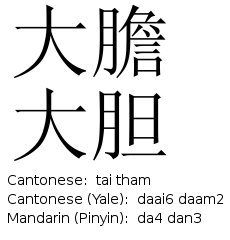
    The Chinese word for ‘courage’ is Da Dan which literally translates as:

    Being Courage/Big Gall Bladder

    Qigong and Courage

    In other words, courage and confidence are linked to gall bladder health and functioning. Any Qigong exercise known for having a bias towards working specifically on the gall bladder can result in increased courage and confidence.

    In my book Shaolin Chi Kung – 18 Exercises To Help You Live A Longer, Healthier and Happier life you’ll find two such forms:

    1. Plucking Stars Change Galaxies – on page 61
    2. Reverse Hands Bend Waist – on page 81

    If you haven’t already got a copy of Shaolin Chi Kung, you can download it here:

    ShaolinChiKungBook.com

    So if you feel a lack of courage or confidence is holding you back from asking out the love of your life, from asking for a pay rise or promotion or simply standing up and being counted.

    If you feel your life will benefit from a boost to your confidence then you now know how best to proceed.

    The door is open, waiting for you. But you have to push it and step through, I can’t do that bit for you. As much as I would dearly like to.

    Which leads very nicely into the second interesting lesson I’d like to bring to your attention.

    2) Jon writes:

    “I was pushing at an open door.”

    Wooo man, that’s some heavy duty stuff right there.

    I reckon I could write a book on that one sentence alone. But I’ll keep it brief here.

    Will you do me a favour?

    Well, it’s more a favour to yourself than it is for me.

    Let me explain:

    I’d like you to consider how many appearing impenetrable ‘doors’ there are in your life. Maybe connected to:

    • Your health.
    • Your wealth.
    • Your relationships.
    • Your work.

    And so on.

    And then I’d ask you to contemplate how many of them are just waiting for you to have the courage to push at them and discover they were never locked at all?

    And I’d love it if you’ll tell me what you find =)

    I’d like to leave you with this quote by Nelson Mandela:

    “I learned that courage was not the absence of fear, but the triumph over it.
    The brave man is not he who does not feel afraid, but he who conquers that fear.”

    Word!

    Enjoy your practice.

    Kindest regards

    Marcus

    P.S. If you haven’t already got a copy of my book Shaolin Chi Kung – 18 Exercises to Help You Live A Longer, Healthier and Happier Life it’s available for immediate download here:

    https://shaolinchikungbook.com

  • 10 Ways To Set Up Regular Chi Kung Practice

    Setting up a daily qigong practice is straightforward — maintaining one is where most people struggle. If you’re finding it hard to stay consistent, you’re not alone. Here are 10 strategies that have worked for practitioners of chi kung (also written as qigong) over the long term, drawn from over a decade of daily practice.

    1. Set a Fixed Time — Choose a time each day when you’re unlikely to be disturbed, and protect it. Negotiate with family or partners if needed. The goal is a non-negotiable slot: “It’s 8pm — time for qigong.”
    2. Get Up 15 Minutes Earlier — We spend a third of our lives asleep. Shifting your alarm by 15 minutes is a small ask for a practice that pays back considerably more. Prepare your clothes and space the night before so there’s no friction when the alarm goes off. That warm, comfortable “I can’t get up” feeling disappears the moment your feet touch the floor — and it’s replaced by something much better.
    3. Make a Contract — Accountability works. Tell someone what you’re committing to, and agree on a consequence if you don’t follow through. One approach: for every day you skip practice, you owe a set amount to someone you care about. For every 28 days you maintain it, you give yourself a meaningful reward. Written or spoken, make it feel binding — because it is.
    4. Find an Accountability Partner — Agree with someone what you’ll both do if you miss practice, and what you’ll do to celebrate 28 days of consistency. Having someone else invested in your progress changes the dynamic significantly.
    5. Increase Your Understanding — Doubt is the main obstacle when building a new qigong habit. The more you understand what you’re doing and why it works, the less doubt can take hold. Review any course materials you have, ask questions, read widely. Understanding sustains commitment.
    6. Be Realistic — Qigong is not a 30-day cure. It’s powerful, and you can feel effects quickly — especially if you’ve learned directly from a qualified instructor — but significant change comes from regular, correct practice over time. You didn’t arrive at your current state of health overnight, and you won’t transform it overnight either.
    7. Get Clear on Your Why — Remind yourself why you started. What will you lose if you stop? What becomes possible if you continue? People are motivated differently: some are driven by the reward ahead, others by the cost of not acting. Know which applies to you, and use it.
    8. Treat It as Sacred Time — Many consistent qigong practitioners treat their practice time as non-negotiable personal time. If the phone rings or the doorbell goes — too bad. You give a great deal of time to others. A healthy, well-practised version of you serves everyone better. Make your practice a priority, not a casualty.
    9. Practice With Like-Minded People — Regular qigong practice with a group is more enjoyable and easier to sustain. Being able to discuss your practice with people who understand it is genuinely valuable. If you stop 100 people on the street, the vast majority will never have heard of qigong — find the ones who have.
    10. Start Again — Every Time — Every time your practice stops, start again as quickly as possible. Drop the guilt. Erratic practice won’t deliver the full benefits of qigong, but restarting is always worth it. The Chinese define success simply: “Fall over seven times, stand up eight.” Never give up on something that matters to you.

    If you’re struggling to maintain a daily qigong practice, pick one strategy from this list and apply it this week — just one. Consistency built on small commitments tends to outlast motivation built on big intentions.

    To learn qigong the way we practice it at Qigong15, take a look at the online course — you can even try it for free.