Qigong (also written as chi kung) practiced correctly — as qigong, not qigong form — offers remarkable benefits for physical, emotional, mental, and spiritual health. But it has two genuine flaws that any honest guide to the practice has to acknowledge. Here they are.
Flaw 1: It Takes Time
Much of what’s written about qigong online is sensational. You could easily come away thinking it’s a 30-day miracle cure. The claims aren’t necessarily wrong — but the timeline is.
For long-term, deep-rooted illness or disease, expect to practice daily — ideally twice daily — for around four to six months before noticing significant improvement. That’s the honest timeframe for serious conditions.
The shorter-term picture is more encouraging: practiced correctly, most people feel relaxed, energised, and genuinely better immediately after a session. But session-by-session improvement is different from lasting change to underlying health. The latter takes consistent, correct practice over time.
Flaw 2: You Have to Do the Work
A teacher can point the way. The practice itself cannot be done for you.
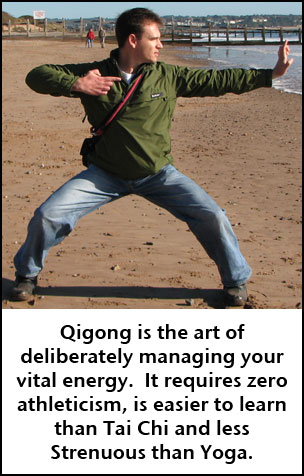
Compared to the demands of learning Tai Chi Chuan or Shaolin Kung Fu, qigong is genuinely simple — fewer movements, simpler theory, shorter sessions. But it still requires the discipline to practice every single day. Reading about qigong, watching videos, buying courses — none of it benefits you unless you actually practice. As the tradition puts it: we don’t learn qigong, we practice qigong.
This is a particular challenge in a culture that tends to outsource health to external solutions. Qigong puts the responsibility back where it belongs — with the practitioner. For some people that’s liberating. For others it’s genuinely difficult. Either way, it’s the reality.
If building a consistent practice is something you struggle with, the motivation for qigong practice page covers this directly.
Is Qigong Right for You?
If you want instant results, or something that works without your active participation, qigong will disappoint you. But if you’re prepared to invest 15 to 30 minutes a day and take genuine responsibility for your health and wellbeing, qigong has a great deal to offer.
The difference between qigong that delivers results and qigong that doesn’t usually comes down to whether you’re practicing the 3 core skills or simply going through the physical movements — a distinction covered in detail on the qigong vs qigong form page.